
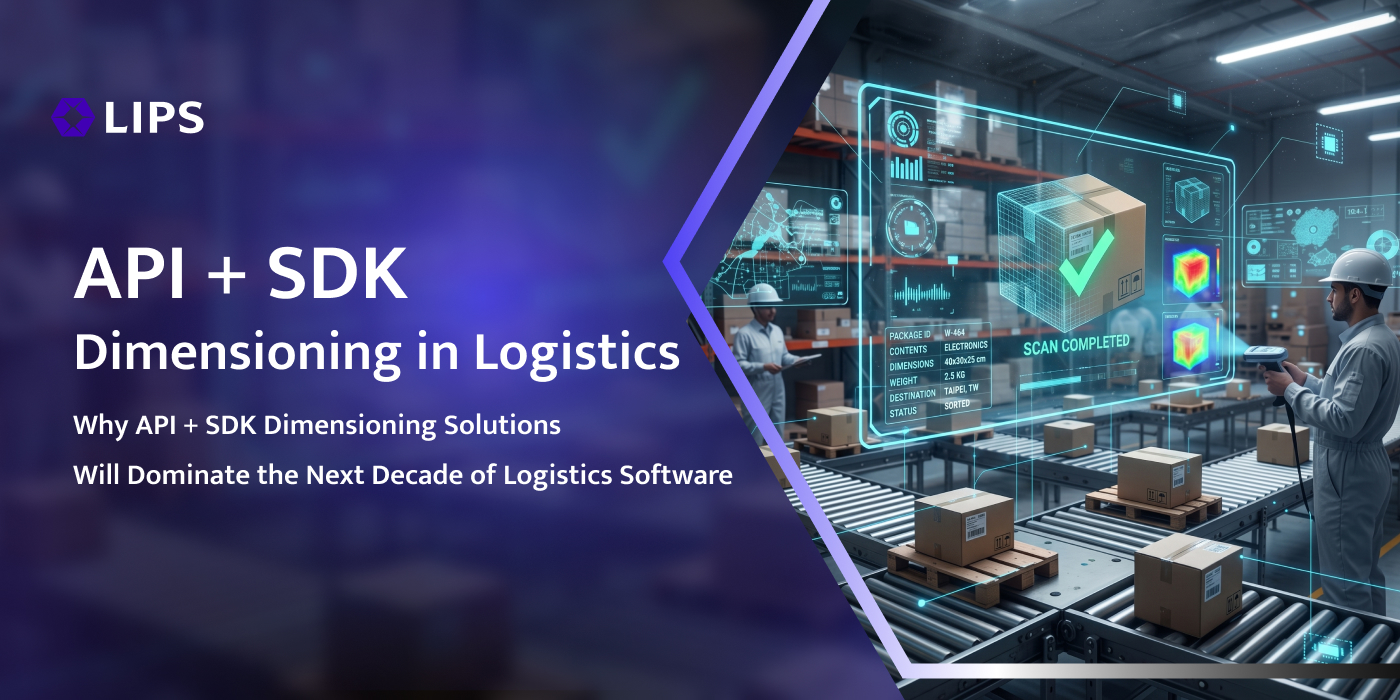
A dimensioning SDK and logistics API let developers connect 3D measurement data directly into WMS, ERP, AMR, and cloud systems. For logistics teams, this turns dimensioning from a fixed hardware station into an integrated software workflow.
Logistics automation is shifting from hardware-only systems to integration-ready dimensioning
For decades, logistics automation relied heavily on hardware-centric systems, including fixed dimensioners, bulky installations, and closed software environments. While these systems solved basic measurement challenges, they introduced a new problem: limited flexibility, scalability, and integration with modern logistics software.
Today, the industry is shifting.
The key question is no longer:“Which dimensioning machine should we install?”
Instead, it is:“How quickly can we integrate dimensioning into our existing logistics ecosystem?”
This shift is driving the rise of dimensioning SDKs, logistics APIs, and developer-first automation tools for warehouse automation.
What is a dimensioning SDK and logistics API for warehouse automation?
A dimensioning SDK (Software Development Kit) allows developers to embed 3D measurement capabilities, including length, width, height, and volume, directly into their applications.
A logistics API enables seamless communication between systems, allowing dimension data to flow into:
- Warehouse Management Systems (WMS)
- Transportation Management Systems (TMS)
- ERP platforms
- Robotics and AMR systems
- Cloud analytics dashboards
Together, they transform dimensioning from a standalone process into a fully integrated, scalable capability that can support WMS, ERP, robotics, AMR, and cloud analytics workflows.
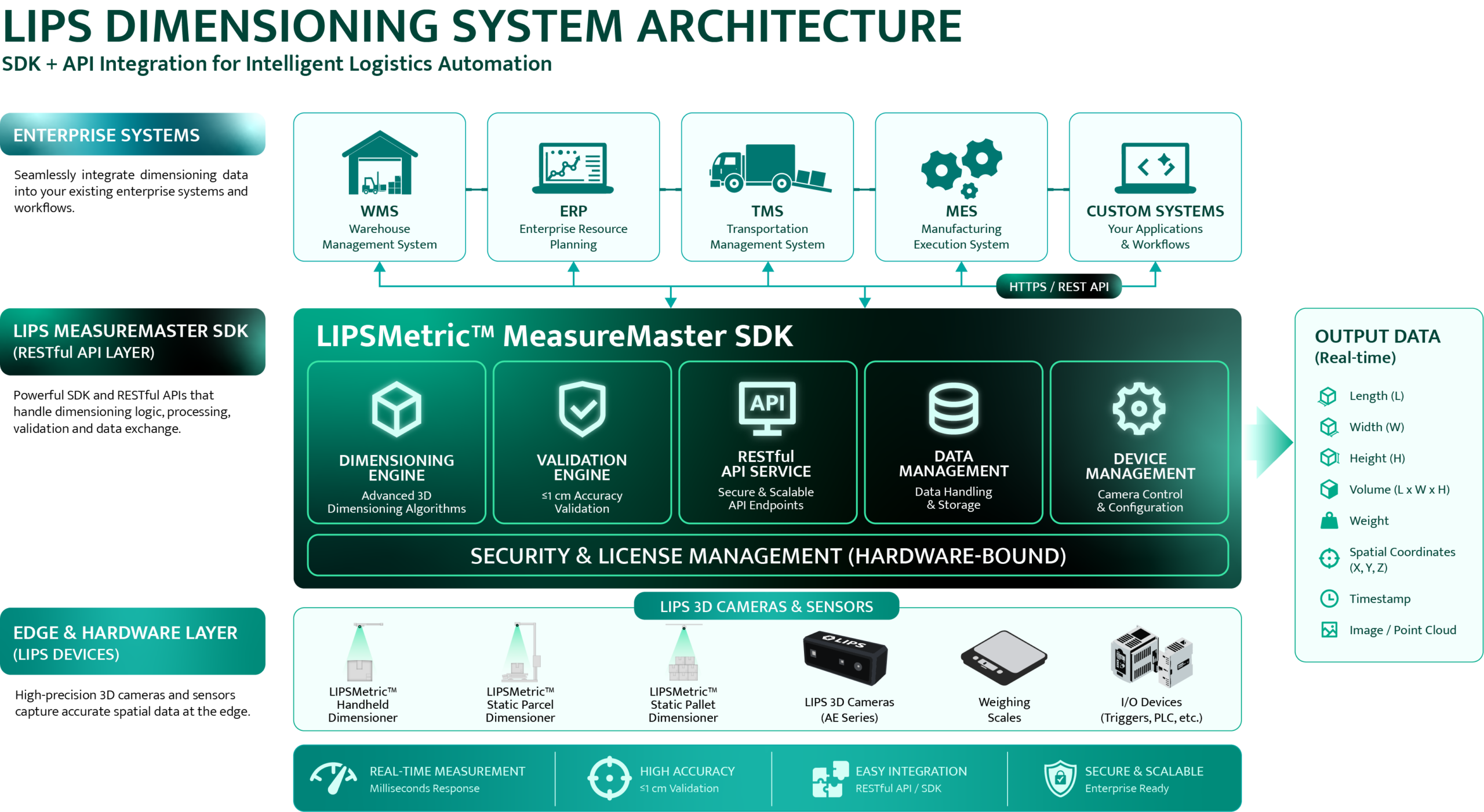
Why hardware-only dimensioning systems limit scalable logistics automation
1. Closed Systems Limit Innovation
Hardware-only solutions operate in silos, making customization slow and expensive.
2. Poor Integration Capabilities
Without API support, dimensioning systems are harder to connect to real-time logistics workflows.
3. High Deployment Costs
Heavy hardware installations require infrastructure changes, making them less suitable for dynamic operations.
4. Lack of Scalability
Expanding traditional systems often means reinvesting in additional hardware setups.
5 reasons API + SDK dimensioning supports scalable logistics software
1. Developer-Driven Automation
Modern logistics automation is increasingly shaped by developers and system integrators. SDKs help teams integrate dimensioning directly into apps, robotics, and automation workflows.
2. Faster Time-to-Market
Instead of months of deployment:
- SDK integration takes days or weeks
- Updates can be deployed instantly
3. Scalability Across Use Cases
API-based dimensioning can scale across:
- Parcel dimensioning
- Pallet measurement
- Robotics validation
- Last-mile delivery optimization
4. Seamless Integration with AI & Robotics
Dimensioning becomes part of intelligent systems, enabling real-time data exchange and decision-making in automated environments.
5. Cloud + Edge Flexibility
Process data at the edge for speed and sync to the cloud for analytics, giving logistics teams both local responsiveness and centralized visibility.
Discuss MeasureMaster SDK Integration
How LIPSMetric™ MeasureMaster SDK turns dimensioning into an integration-ready platform
As logistics teams move toward API-first architecture, LIPSMetric™ MeasureMaster SDK from LIPS Corporation is designed for integration-driven dimensioning workflows.
It helps transform dimensioning from a hardware-only tool into a scalable, developer-ready platform for logistics automation.
MeasureMaster SDK is built for developers and system integrators
Unlike systems designed only for operator-facing use, MeasureMaster SDK is designed for developers and system integrators.
With its RESTful API, teams can:
- Retrieve real-time dimension data
- Automate workflows across systems
- Integrate seamlessly into WMS, ERP, and robotics platforms
This makes it a dimensioning SDK for warehouse automation, not just a standalone measurement tool.
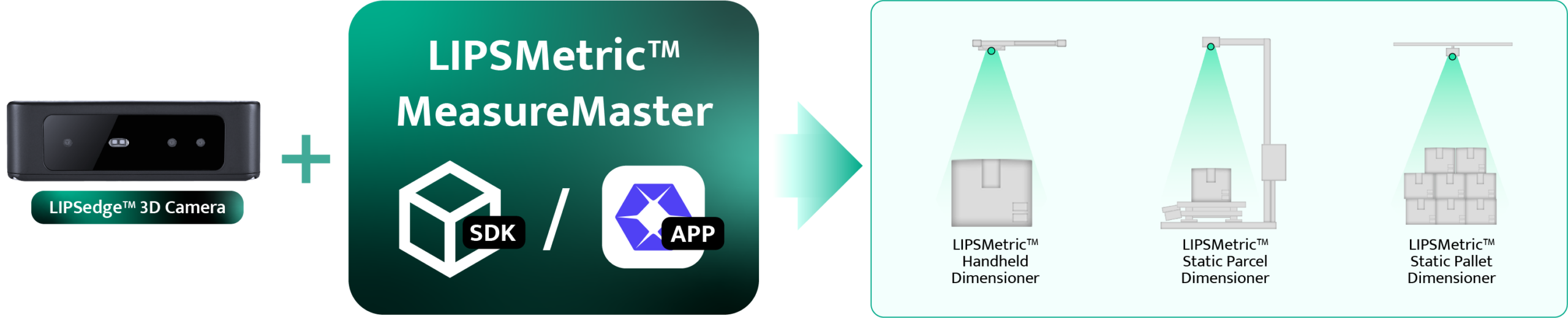
MeasureMaster SDK connects dimension data to existing WMS, ERP, and AMR workflows
MeasureMaster SDK is built for fast, low-friction integration.
It enables:
- Easy connection with WMS and ERP systems
- Real-time API-based data exchange
- Integration with robotics and AMRs
- Automated triggers, logs, and reporting
This helps teams shorten the path from deployment planning to workflow integration can now be achieved in days.
Hardware-bound licensing supports scalable dimensioning deployment
Scaling dimensioning systems can be complex when each deployment depends on a separate hardware setup.
MeasureMaster SDK introduces:
- Hardware-bound runtime licensing (1:1 per camera)
- Multi-camera deployment capability
- Flexible expansion without redesign
This allows businesses to:
- Start small
- Scale gradually
- Control costs efficiently
SDK and app deployment options help teams balance speed and automation
Many GUI-based applications are easy for operators to use but harder to scale across automated workflows.
LIPS offers both:
- MeasureMaster SDK (API-first) → Full automation and control
- MeasureMaster App (UI-based) → Quick deployment without coding
This dual approach allows companies to:
- Start with simple solutions
- Transition into full automation with less workflow disruption
Where API + SDK dimensioning fits in logistics workflows
Smart Warehousing
Enable instant dimension capture during inbound scanning to optimize storage.
E-Commerce Fulfillment
Calculate volumetric weight accurately and reduce shipping errors.
Robotics & AMR Integration
Allow robots to adjust positioning based on real-time dimension data.
Pallet Optimization
Improve loading efficiency and reduce wasted space.
Why API-first dimensioning platforms give logistics teams more flexibility
Many traditional dimensioning deployments focus on:
- Hardware sales
- Closed ecosystems
- Limited integration
LIPS focuses on:
- API-first architecture
- Developer ecosystem (SDK, documentation, tools)
- Scalable automation-ready solutions
This positions LIPS as more than a product provider: it positions LIPS as a platform partner for logistics automation.
From measurement data to logistics intelligence
The true value of API + SDK dimensioning lies beyond measurement.
It enables:
- Predictive analytics
- Automated billing systems
- Space optimization algorithms
- Data-driven logistics decisions
Teams that adopt integrated dimensioning can move from:
- Measuring parcels as a standalone task
- Optimizing entire logistics ecosystems
The next generation of logistics software is modular and API-driven
The next generation of logistics software is moving away from standalone machines and toward modular, API-driven ecosystems.
Dimensioning SDKs and logistics APIs are becoming key building blocks in this transformation.
Evaluate LIPSMetric™ MeasureMaster SDK
Start planning a logistics dimensioning workflow that connects measurement data with the systems your team already uses.
Frequently Asked Questions
Q1: What is a dimensioning SDK?
A dimensioning SDK is a software development kit that lets developers embed 3D measurement capabilities into logistics applications. In this article, the SDK connects length, width, height, and volume data with workflows such as WMS, ERP, robotics, AMR, and cloud analytics.
Q2: How does a logistics API improve warehouse automation?
A logistics API allows dimension data to move between systems in real time instead of staying inside a standalone measurement tool. This helps teams connect dimensioning with inbound scanning, billing, storage optimization, robotics validation, and reporting workflows.
Q3: How does LIPSMetric™ MeasureMaster SDK support API + SDK dimensioning?
LIPSMetric™ MeasureMaster SDK is designed for API-first dimensioning workflows. With RESTful API support, hardware-bound runtime licensing, and multi-camera deployment capability, it helps developers and system integrators connect dimension data to existing logistics software.
Q4: What is the difference between a dimensioning SDK and a fixed dimensioner?
A fixed dimensioner is typically deployed as a dedicated measurement station. A dimensioning SDK lets developers embed measurement data into existing logistics applications and automated workflows, giving teams more flexibility when they need WMS, ERP, AMR, or cloud integration.
Q5: When should logistics teams choose MeasureMaster SDK instead of MeasureMaster App?
MeasureMaster SDK is better suited when developers need API-first integration, workflow automation, or multi-system data exchange. MeasureMaster App is more appropriate when a team needs a UI-based deployment path without building custom software.