
Compare the trade-offs among 3D sensing technologies in accuracy, effective range, cost, and deployment environment to select the right solution for robotics, AMR, or embedded vision systems
Introduction: A Decision Framework for 3D Depth Technology Selection
Selecting the optimal 3D sensing solution for robotics or embedded vision involves evaluating technical trade-offs across accuracy, operational range, and system cost. Fundamental performance capabilities—ranging from navigation precision to power consumption—hinge upon the specific architecture of the chosen sensor. Because business requirements often conflict with hardware limitations, a data-driven selection process must replace general comparisons.
This technical assessment synthesizes empirical performance data across diverse environmental conditions to establish a clear framework for identifying the most viable 3D camera for a given application.
For a foundation in depth maps, triangulation, ToF, and 3D reconstruction, review how 3D depth cameras work before comparing technologies for your project.
Technical Trade-offs: Three Main Architectures and Deployment Boundaries in 3D Depth Technology
3D sensing architecture selection necessitates a rigorous navigation of competing performance metrics that often remain opaque without empirical benchmarks. Engineers must balance hardware constraints against the specific environmental variables of the deployment site. Without empirical benchmarks, indicators often remain unclear. The following sections explain the operating principles and measured benchmarks of three major 3D sensing technologies.
Structured Light
- Operating principle: Actively projects a specific encoded pattern and calculates depth from geometric deformation captured by the camera.
- Advantages: Provides very high accuracy and strong static stability.
- Limitations: Cannot withstand sunlight environments because the projected pattern may be overwhelmed by ambient light, and the measurement range is shorter.
- Suitable applications: High-precision indoor measurement and inspection, such as face unlock and industrial inspection.
For related product options, review LIPSedge L Series Structured Light 3D cameras.
Time of Flight (ToF)
- Operating principle: Acquires depth signals by measuring the time difference of light travel.
- Advantages: High frame rate, low latency, low algorithm power consumption, and no dependence on environmental texture.
- Limitations: Susceptible to multipath interference (MPI) and flying pixels near corners, and highly reflective objects may cause overexposure. Outdoor applications usually require higher power.
- Suitable applications: Scenarios that require fast response and real-time interaction, such as warehouse AMRs and gesture control.
For related product options, review LIPSedge Time-of-Flight 3D cameras.
Stereo Vision
- Operating principle: Calculates depth based on disparity between left and right images through baseline design, without relying on an active light source.
- Advantages: Performs very well under outdoor sunlight, supports longer measurement distance, and offers flexible cost options.
- Limitations: More vulnerable and sensitive to white walls or textureless surfaces.
- Suitable applications: Outdoor all-weather navigation and large-scene monitoring, such as autonomous driving and outdoor AMRs.
For projects requiring Active Stereo, review LIPSedge AE Series industrial 3D cameras.
These engineering limitations fundamentally change sensor reliability. Using the following indoor experiment as an example, benchmark testing of LIPSedge™ 3D depth camera models further defines the applicable boundaries of each technology under different distances and object types.
Field Experiment: Comparative Performance Analysis of LIPSedge™ 3D Sensing Technologies
LIPS Corp. has conducted a comparative experiment to evaluate the operational boundaries of primary 3D sensing modalities. This technical assessment prioritizes the inherent tension between depth accuracy and effective sensing range. By isolating variables across Stereo Vision, Structured Light, and Time-of-Flight (ToF) technologies, the data reveals how specific hardware architectures respond to varying surface materialities and distances.
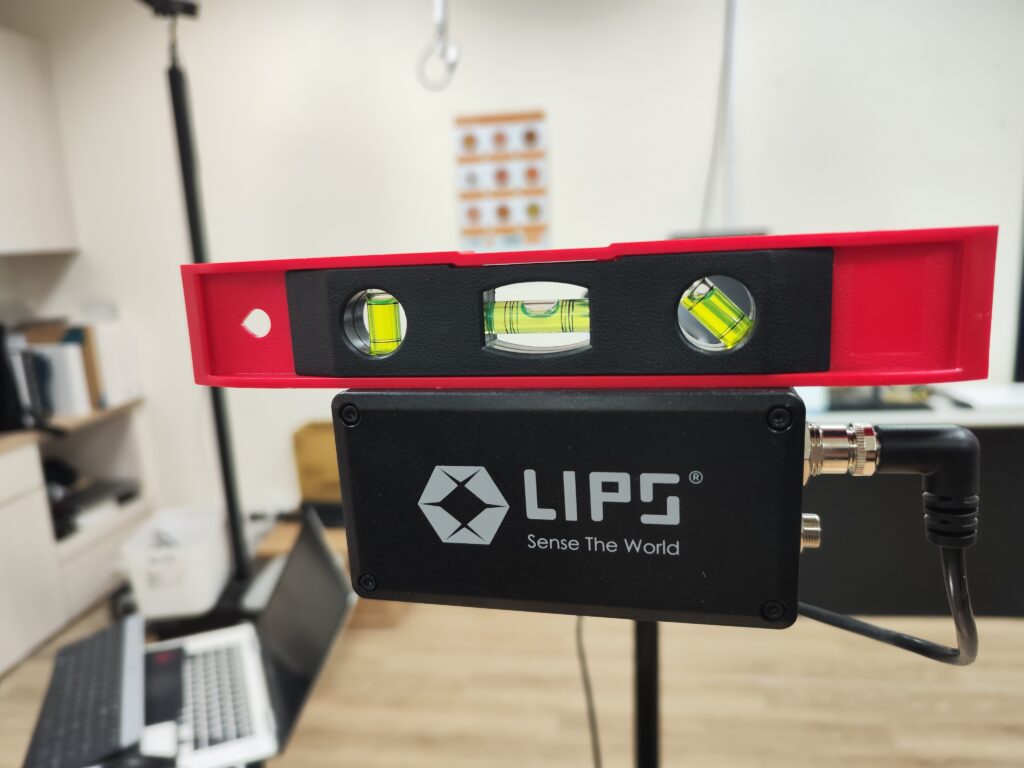
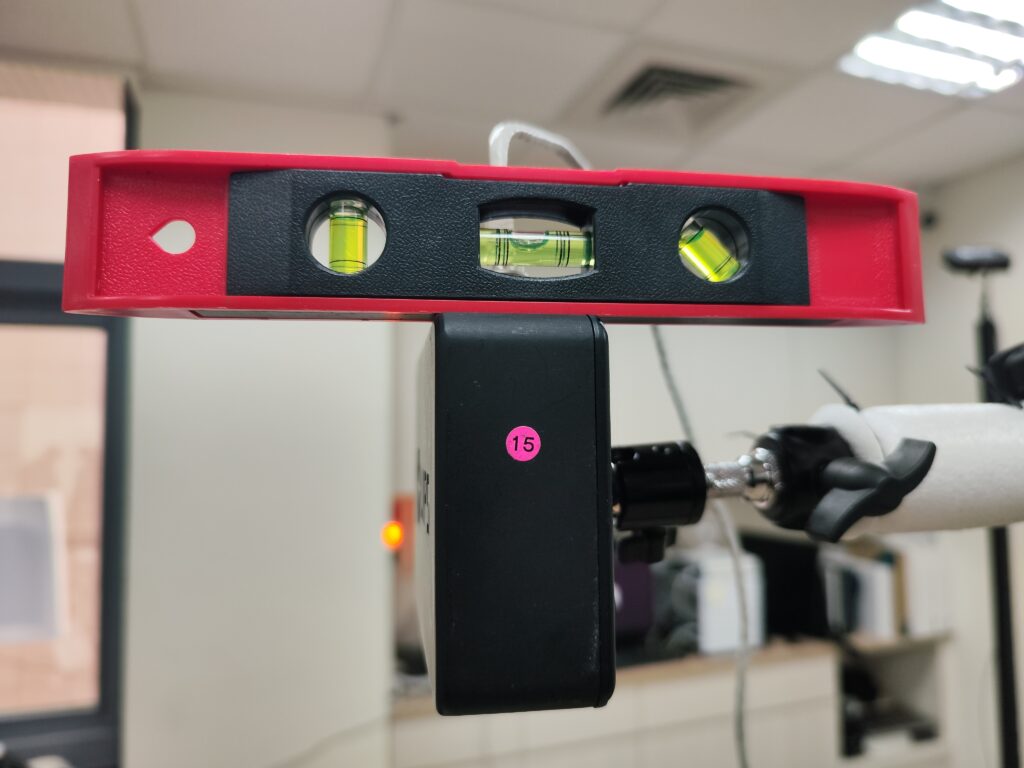
[A. Experimental Environment]
The following parameters defined the experimental environment to ensure consistency across the LIPSedge™ product lineup:
- Environment: Indoor office setting with standard ambient lighting.
- Target Objects: High-reflectivity (shiny) surfaces and standard matte (regular) diffuse objects.
- Distance Parameters: Distance can vary depending on the size of the object. In this experiment, LIPS adopts effective depth accuracy of 70 cm
 |
 |
[B. Tested Models]
- Stereo Vision: LIPSedge™ AE400 / AE430
- Structured Light: LIPSedge™ L210u
- Time of Flight (ToF): LIPSedge™ DL
[C. Experimental Results]
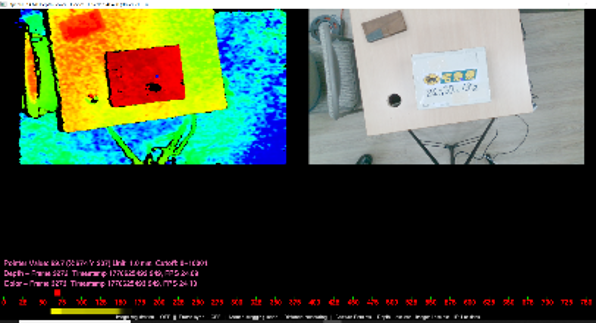
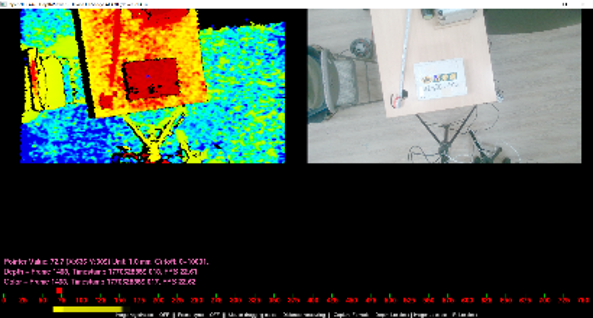
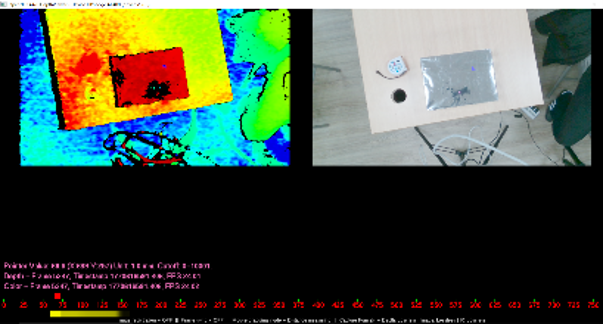
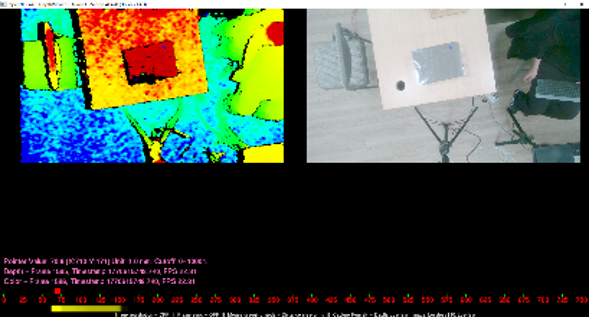
Stereo vision systems maintain the highest degree of viability when the application demands a longer effective distance. The LIPSedge™ AE series utilizes dual-sensor triangulation to calculate depth, which permits a scalable baseline for extended range requirements. While these models require sufficient surface texture to match features accurately, they outperform active illumination methods in large-scale indoor environments where the signal-to-noise ratio of a projected pattern might otherwise degrade.
In contrast, the structured light and ToF models demonstrate a sharp trade-off between precision and environmental versatility. The LIPSedge™ L210u (Structured Light) and DL (ToF) provide superior sub-millimeter accuracy at close ranges but face significant limitations when encountering shiny or metallic surfaces. Reflective targets induce multipath interference for ToF and pattern distortion for structured light, resulting in depth errors or “holes” in the point cloud. Furthermore, these active technologies (Structured Light and ToF) exhibit a shorter effective distance than stereo systems. This is because their depth extraction directly relies on the return signal intensity of their own light source, which suffers from severe attenuation due to the inverse-square law; whereas stereo systems rely primarily on feature matching.
Ultimately, selecting the appropriate 3D camera requires a strategic alignment with the specific constraints of the deployment site. Stereo vision remains the optimal choice for projects prioritizing distance and outdoor-ready robustness. Conversely, developers should deploy structured light or ToF solutions when the use case demands high-fidelity, short-range precision on diffuse objects. Balancing these technical trade-offs ensures the delivery of a reliable, high-performance 3D vision system.
| Distance Parameter | |
| Set to 70 cm | 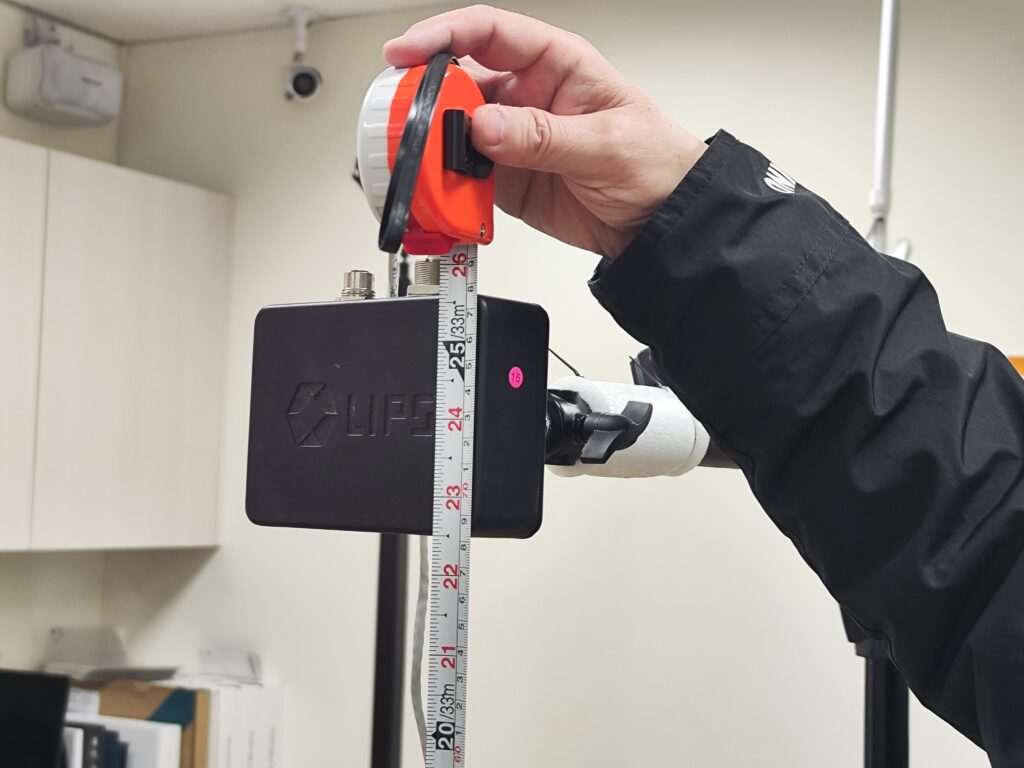 |
| AE400 – Standard Object | AE430 – Standard Object |
 |
 |
| AE400 – Highly Reflective Object | AE430 – Highly Reflective Object |
 |
 |
| Distance Parameter | |
| Set to 70 cm | |
| DL – Standard Object | L210u – Standard Object |
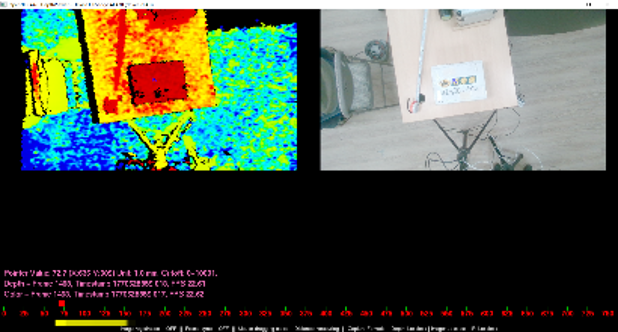 |
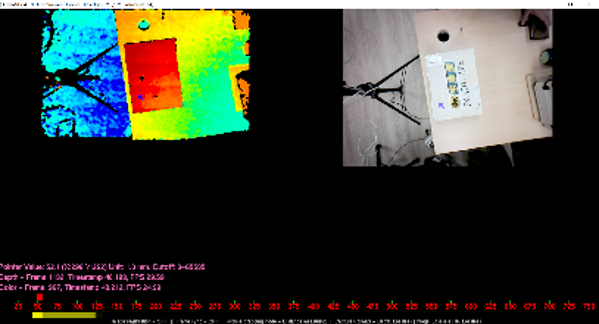 |
| DL – Highly Reflective Object | L210u – Highly Reflective Object |
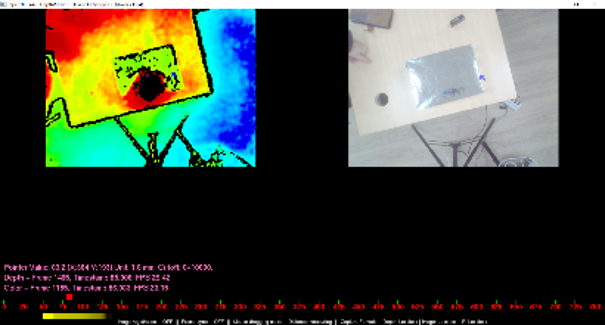 |
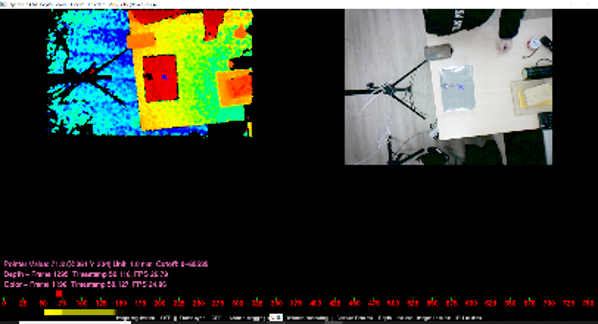 |
3D Depth Technology Selection Framework: Select the Right Technology by Project Environment
After reviewing the technical details of 3D sensing, it is clear that these trade-offs are challenging. Based on LIPS’ ten years of experience in embedded vision, the following structured decision process helps select suitable hardware according to specific application requirements.
Indoor Applications
Indoor lighting is usually more controllable, but 3D depth technology selection still needs to address object material, surface reflection, shape complexity, and real-time dynamics. If the application requires micron-level or high-precision measurement, such as industrial inspection or face unlock, structured light is usually advantageous, but object surface characteristics and measurement-distance limits must be evaluated. If the scene prioritizes fast response, obstacle avoidance, or real-time interaction, such as warehouse AMRs and gesture control, ToF can provide faster depth acquisition, while reflective materials and noise still require attention. If the application expands to indoor large-space navigation, stereo vision or ToF fusion should be considered to balance measurement range, scene coverage, and system stability.
Outdoor Applications
Outdoor environments are among the most demanding scenarios for 3D sensing technology selection. The main challenges include intense sunlight up to 100,000 lux, infrared interference, and all-weather changes such as rain, snow, and fog. Under strong sunlight, passive stereo vision is usually the first option to evaluate because it does not rely on an active light source. This technology is more suitable for autonomous driving and outdoor AMRs, but image contrast, object texture, and baseline design still need to be evaluated. In nighttime or mid-to-short-range obstacle avoidance, active ToF may be an option, but it usually requires higher power to maintain an effective depth signal. Structured light is not recommended for outdoor daylight because its encoded pattern is easily overwhelmed by ambient light, causing depth data failure or instability.
Decision Framework: Selecting the Right Technology
The most suitable 3D vision technology can be determined through three systematic evaluation steps:
First, “confirm the project environment” is the primary condition. If the application is outdoors, the main recommendation is stereo vision, which simulates human binocular vision. For nighttime or short-range obstacle avoidance, a stereo vision + ToF fusion solution is recommended to calculate photon time differences. The diagram specifically warns that structured light is not recommended for outdoor daylight environments.
If the project environment is indoors, proceed to the second step: “determine the accuracy requirement.” When accuracy requirements are very high, below 1 mm or at micron level, structured light is the first choice, but its sensitivity to ambient light must be considered. If the accuracy requirement is at centimeter level, proceed to the third step: “determine target-object status.”
In this final stage, if the target object is moving at high speed, requires real-time feedback, or has a textureless surface, ToF is the more suitable option because it provides a very high frame rate, low algorithm power consumption, and fast response. Conversely, for large scenes or richly textured targets, stereo vision or active stereo is recommended. This solution is less affected by sunlight, supports longer measurement distance, and offers flexible cost options, but surface texture and feature-matching conditions still need to be evaluated.
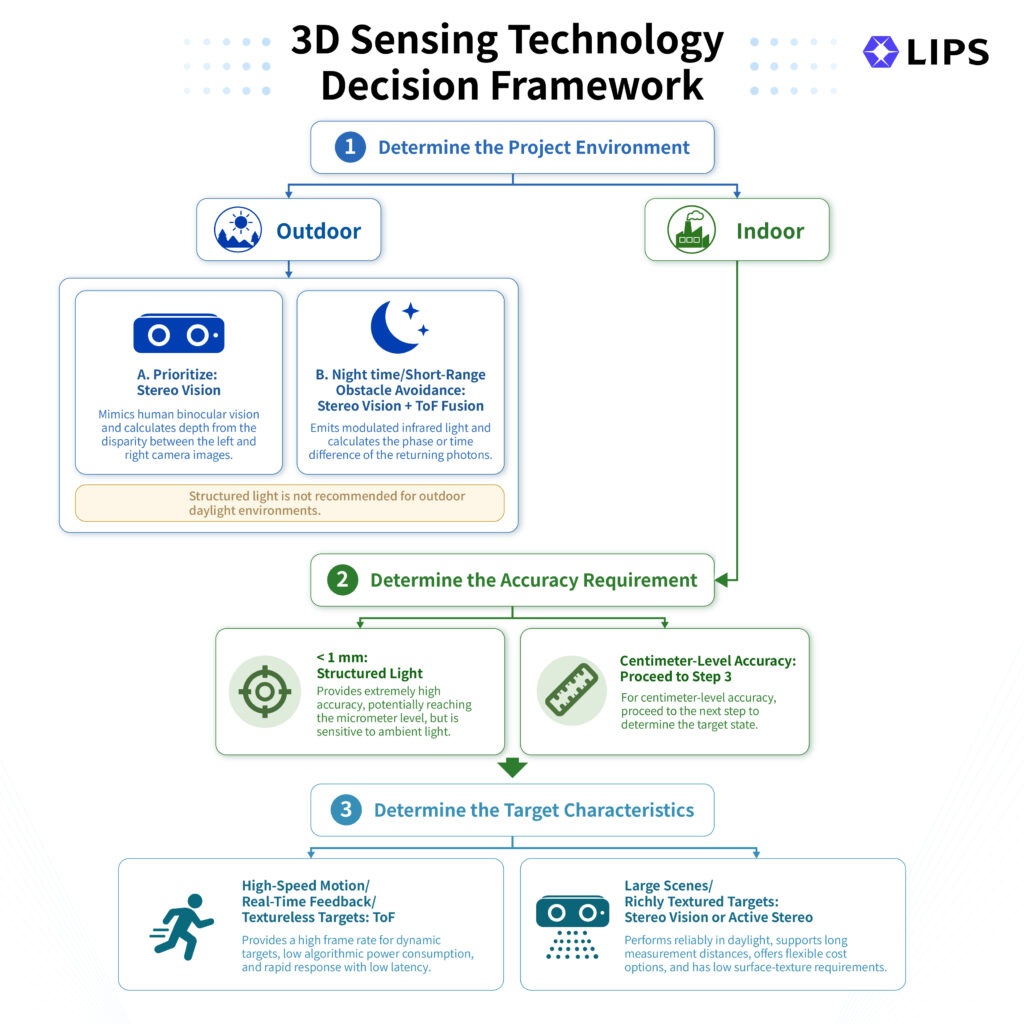
3D Sensing Technology Selection Diagram
If uncertainty remains after following this structured decision process, refer to the technology selection diagram below to quickly narrow the options by environment and technical priority. Each technology has a specific niche market, and its inherent operating principle provides unique advantages in that domain.
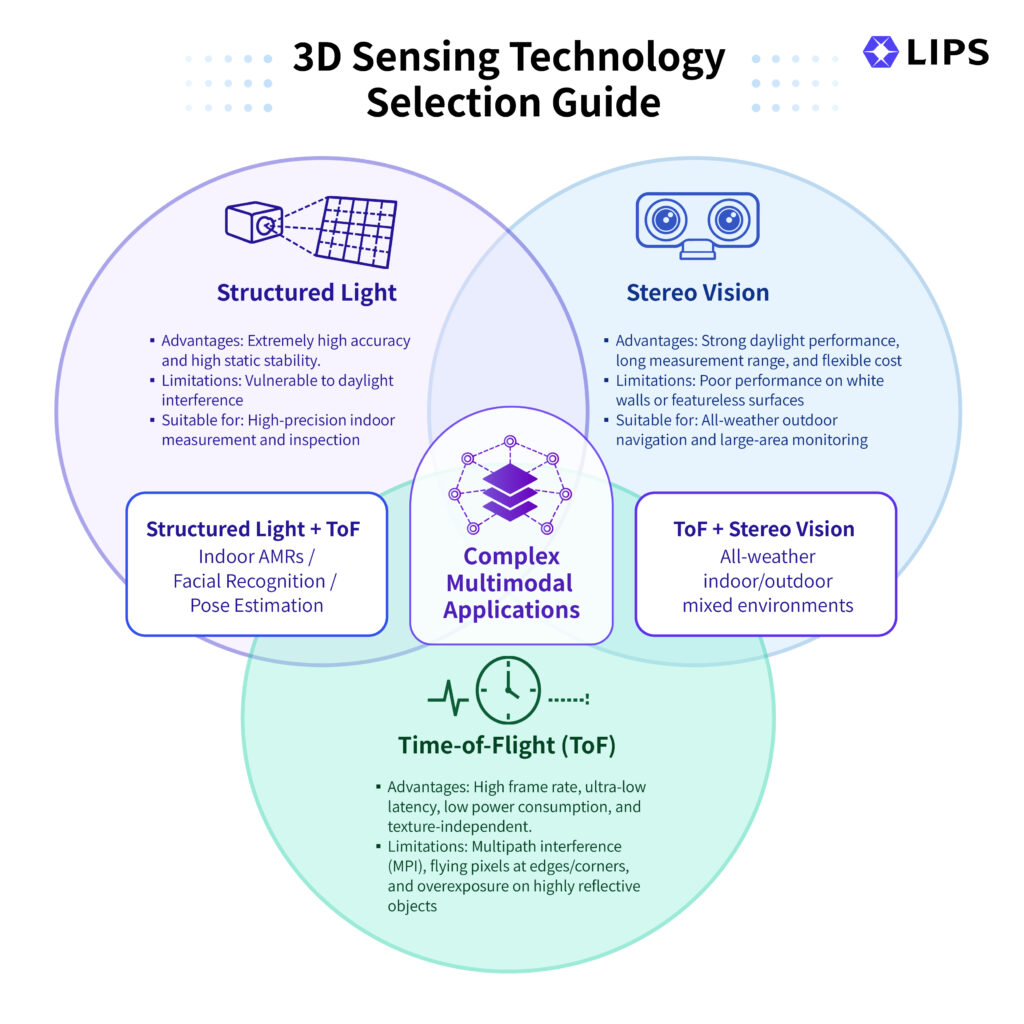
As shown in the selection diagram above, the three core technologies each occupy an irreplaceable niche. For extremely high accuracy in indoor measurement without sunlight, structured light has stronger advantages. For outdoor intense sunlight and large-scene monitoring, sunlight-resistant stereo vision is the first option to evaluate. When the application focuses on high frame rate, low latency, and targets without environmental texture, the advantages of Time of Flight (ToF) become clear.
However, in complex real-world deployments, a single technology often has limits. This selection diagram further shows the problem-solving path of multimodal fusion. For example, combining structured light and ToF can support indoor AMRs, face recognition, and posture recognition. ToF combined with stereo vision can flexibly handle mixed indoor/outdoor all-weather scenarios. For the most difficult outdoor all-weather large-scene navigation, the complex multimodal applications at the core are required. Engineers and decision-makers can use the intersection areas in this diagram to precisely identify suitable hardware combinations that balance technical advantages and environmental constraints.
Application Selection Summary
-
Choose Structured Light for: High-precision indoor measurement, industrial part inspection, and stationary short-range scanning in controlled environments without strong sunlight.
-
Choose Stereo Vision for: Outdoor navigation, long-range measurement, and large-area monitoring where strong daylight performance is important. Performance may decrease on white walls and other low-texture or featureless surfaces.
-
Choose Time-of-Flight(ToF)for: Applications requiring high frame rates, low latency, low power consumption, or reliable depth sensing on texture-poor objects, such as gesture control, dynamic tracking, and basic obstacle avoidance.
-
Choose Structured Light + ToF for: Indoor AMRs, facial recognition, and pose estimation that require both detailed spatial capture and responsive depth sensing.
-
Choose ToF + Stereo Vision for: Mixed indoor and outdoor environments with changing lighting and operating conditions. More complex navigation and perception tasks may require broader multimodal sensor fusion.
Need Expert Support for 3D Depth Technology Selection?
Choosing between stereo vision, structured light, and ToF requires balancing the deployment environment, working range, target material, accuracy, and integration needs. Explore the LIPSedge 3D depth camera portfolio, or contact LIPS to discuss your robotics, AMR, or embedded vision project.
FAQ: 3D Depth Technology Selection
1. Which depth sensing technology is best for indoor applications?
For general indoor robot navigation (AMR) and obstacle avoidance under variable lighting, Time of Flight (ToF) is usually a priority option because it provides stable mid-range accuracy, low computing load, and can handle featureless walls. However, if the application is static and requires very high accuracy at short range, such as high-resolution 3D scanning or quality inspection, structured light is superior.
2. How do ToF and structured light compare outdoors or under sunlight?
Both require careful evaluation outdoors. However, modern ToF sensors with high modulation frequency and narrow-band infrared filters have significantly better sunlight resistance than structured light. Structured-light patterns are easily washed out by background infrared radiation in sunlight, making them unusable. Stereo vision remains the priority standard for outdoor applications, but high-quality modern ToF devices can also be evaluated under specific conditions.
3. How should power consumption, cost, and accuracy be balanced in a sensor?
ToF usually provides a better balance for power-constrained sensors. Although the sensor device cost is moderate, it directly outputs depth data and requires very little expensive host computing resource. Stereo vision has lower sensor cost, but requires high-performance computing for real-time depth calculation, which increases total system cost and power consumption. Structured light provides high accuracy, but usually has higher device cost and a moderate computing load.
4. How do highly reflective objects affect ToF and structured-light measurement?
Experiments show that glossy or metallic surfaces may cause ToF multipath interference (MPI) and structured-light pattern distortion, leading to depth errors or holes in the point cloud. Therefore, if a project needs to measure highly reflective objects, benchmark testing should be performed using the actual material and distance conditions.
5. When is a multimodal 3D sensing solution required?
A multimodal 3D sensing solution should be evaluated when a single technology cannot simultaneously meet distance, accuracy, lighting, and target-object status requirements. For example, ToF with stereo vision can address mixed indoor/outdoor scenarios, while structured light with ToF can support some indoor AMR, face recognition, and posture recognition requirements.