
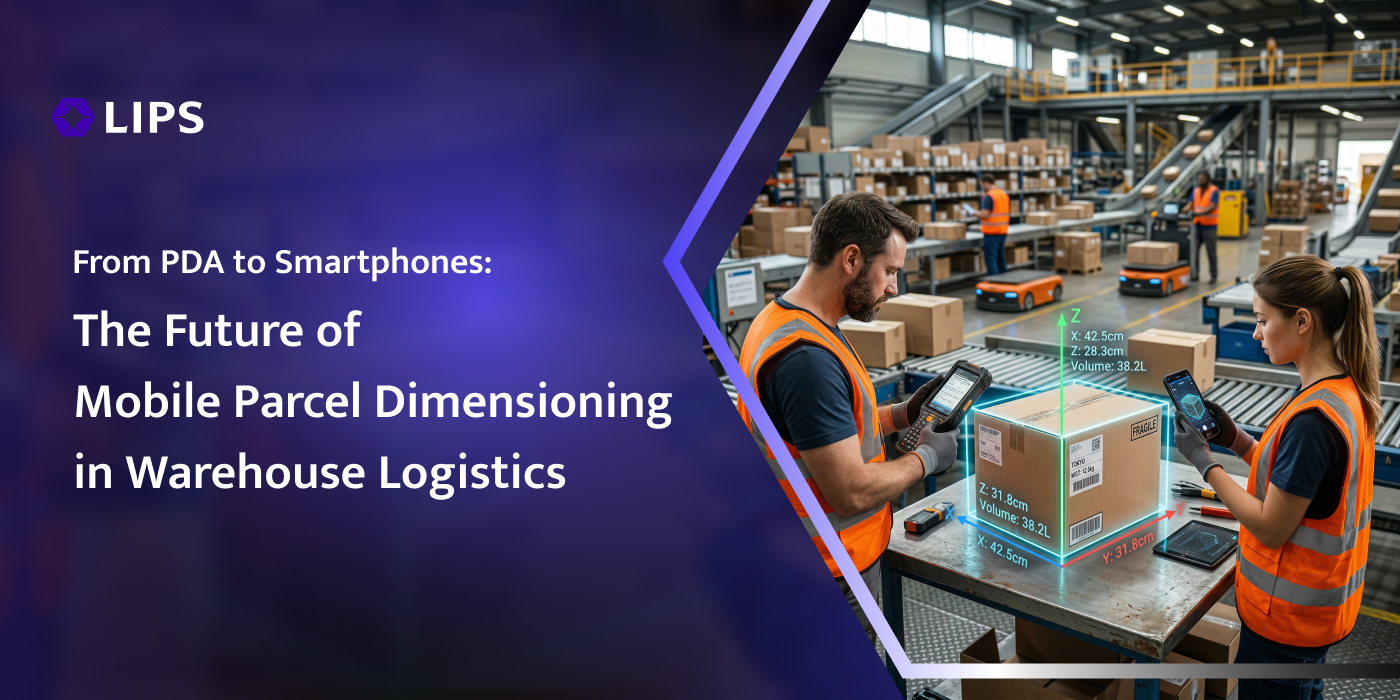
The rapid growth of e-commerce and global supply chains has transformed warehouse and logistics operations. Every day, distribution centers handle thousands-or even millions-of parcels that must be processed quickly and accurately.
One critical step in this process is dimension measurement. Logistics providers need precise data on parcel length, width, and height to calculate shipping costs, optimize storage space, and improve operational efficiency.
However, traditional measurement methods-such as tape measures or fixed dimensioning stations-are often slow, labor-intensive, and prone to human error. As warehouse operations scale, these outdated processes can create significant bottlenecks.
To overcome these challenges, logistics companies are increasingly adopting automated mobile dimensioning solutions powered by 3D vision technology.
This is where LIPSMetric introduces a new approach: enabling accurate automated mobile parcel dimension measurement using compact 3D cameras integrated with everyday devices such as PDAs, smartphones, tablets, barcode scanners, and kiosks.
The Growing Need for Automated Mobile Parcel Dimensioning
Accurate parcel dimension data plays a critical role across the logistics ecosystem.
Shipping carriers calculate charges based on dimensional weight, meaning inaccurate measurements can lead to costly disputes or unexpected fees. At the same time, warehouse management systems (WMS) rely on precise package dimensions to optimize storage allocation, packing strategies, and transportation planning.
Yet in many facilities, workers still manually measure packages using tape measures. This process introduces several challenges:
- Slow measurement speed
- Human errors in recording data
- Labor-intensive operations
- Inconsistent measurement results
- Limited integration with digital systems
In large warehouses, even a small delay in measurement can multiply across thousands of packages, reducing operational efficiency and increasing labor costs.
To address these challenges, companies are moving toward automated mobile dimensioning systems powered by 3D vision technology.
Why Automated Mobile Dimensioning Is Transforming Warehouse Operations
Traditional automated dimensioning systems are typically installed as fixed stations within the warehouse. While effective, they often require significant infrastructure investment and can limit operational flexibility.
Modern logistics environments demand something different: mobility and scalability.
Mobile dimensioning allows warehouse staff to measure parcels anywhere during receiving, sorting, packing, or shipping-without relying on fixed stations.
This flexibility delivers several advantages:
- Faster parcel processing
- Reduced worker movement and handling time
- Increased measurement accuracy
- Lower infrastructure investment
- Seamless integration with digital logistics systems
Instead of building expensive measurement stations, warehouses can now transform everyday devices into intelligent dimensioning tools.
Introducing LIPSMetric: A Flexible 3D Dimensioning Solution
LIPSMetric is designed to bring powerful 3D dimension measurement capabilities into modern logistics workflows.

By combining 3D depth cameras with an easy-to-integrate software platform, LIPSMetric allows businesses to capture accurate parcel dimensions in real time using a wide range of devices.
The system consists of two core components:
3D Vision Hardware
A compact 3D depth camera captures accurate spatial data and calculates the dimensions of parcels and objects.
Application / SDK Integration
The software layer enables seamless integration with various devices and existing warehouse systems, making deployment fast and scalable.
This architecture enables companies to deploy dimensioning capabilities without complex hardware installations or operational disruptions.
Turning Everyday Devices into Automated Dimensioning Tools
One of the key advantages of LIPSMetric is its ability to integrate with multiple device platforms used in logistics environments.
Instead of introducing new equipment into workflows, the solution enables existing devices to become smart automated dimension measurement tools.
PDA Devices
PDAs are widely used by warehouse operators for inventory management, order picking, and logistics tracking.
By integrating LIPSMetric with PDA devices, workers can measure parcel dimensions instantly while scanning items or processing shipments. This reduces extra steps and speeds up daily operations.
Smartphones
Smartphones provide an accessible and flexible platform for mobile logistics applications.
With LIPSMetric integration, smartphones can perform real-time parcel dimensioning using 3D vision technology. This is particularly useful for field operations, mobile warehouses, or temporary logistics facilities.
Handheld Tablets
Industrial tablets are often used for warehouse supervision, receiving operations, and quality inspections.
When equipped with LIPSMetric, these tablets can measure parcel dimensions quickly while displaying additional operational data, making them ideal for receiving docks and inspection stations.
Barcode Scanners
Barcode scanners are a core tool in logistics operations. Integrating dimensioning capability directly into barcode scanning devices enables workers to capture both package identification and dimensional data in one workflow.
This combined functionality significantly improves process efficiency and reduces operational steps.
Self-Service Kiosks
In logistics hubs or distribution centers, kiosks can be deployed for self-service parcel measurement.
Customers or operators simply place the package under the 3D camera system, and LIPSMetric automatically calculates the dimensions and records the data for shipment processing.
Key Benefits for Logistics and Warehouse Operations
By enabling flexible multi-device integration, LIPSMetric provides several advantages for logistics providers and warehouse operators.
Increased Operational Efficiency
Workers can measure parcels instantly without moving to fixed stations, accelerating parcel handling processes.
Reduced Labor Costs
Automated measurement reduces manual work and allows warehouse staff to focus on higher-value tasks.
Improved Measurement Accuracy
3D vision technology eliminates common human measurement errors and ensures consistent results.
Faster Data Integration
Dimensional data can be automatically integrated into warehouse management systems, improving data accuracy and operational visibility.
Scalable Deployment
Because LIPSMetric integrates with multiple devices, companies can scale deployment across different warehouse operations without significant infrastructure investment.
Real-World Applications in the Logistics Industry
The flexibility of automated mobile dimensioning makes it suitable for a wide range of logistics environments.
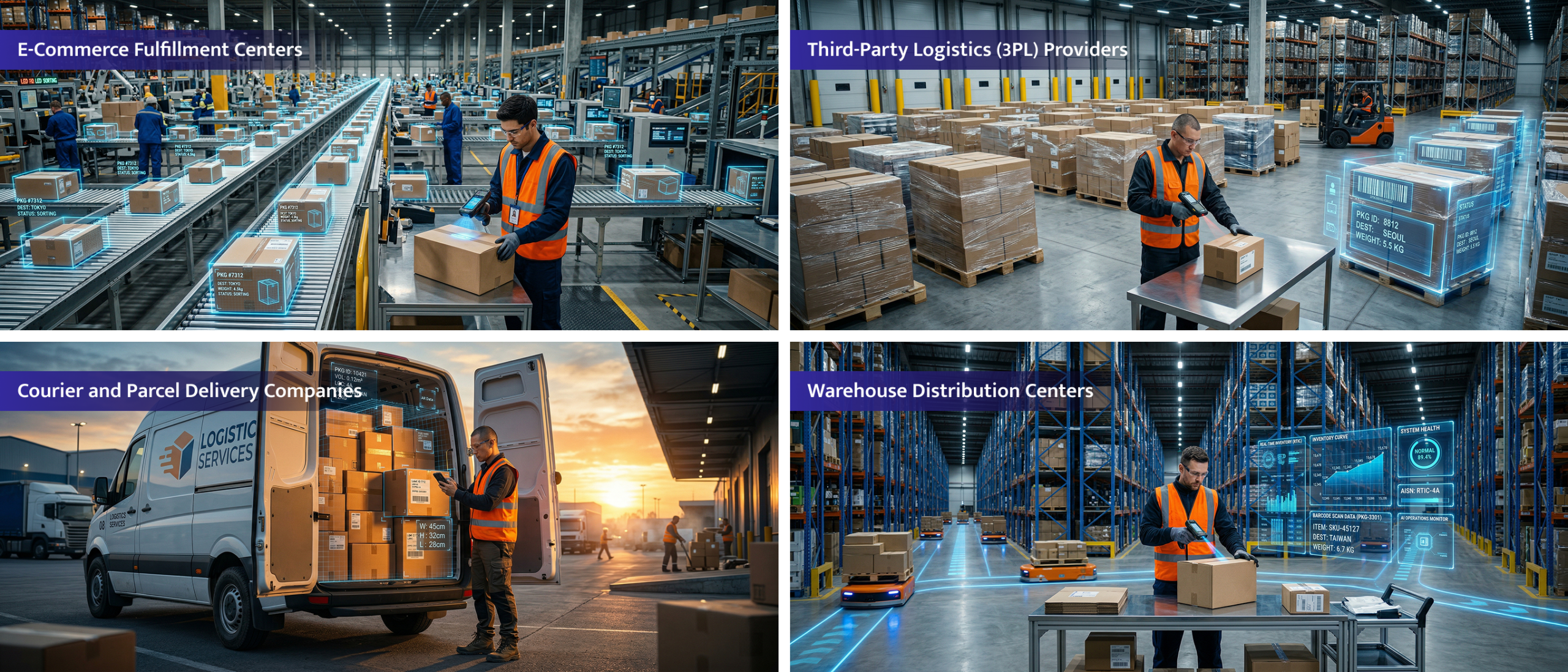
E-Commerce Fulfillment Centers
High-volume fulfillment centers must process thousands of packages daily. Mobile dimensioning speeds up receiving, packing, and shipping workflows.
Third-Party Logistics (3PL) Providers
3PL providers handle diverse package sizes and client requirements. Accurate dimension measurement ensures fair shipping cost calculations and improved operational transparency.
Courier and Parcel Delivery Companies
Courier companies rely heavily on dimensional weight calculations. Automated dimensioning reduces disputes and ensures accurate billing.
Warehouse Distribution Centers
Distribution centers benefit from faster inventory measurement and improved space optimization when accurate dimension data is available.
The Future of Smart Logistics Measurement
As logistics operations continue to evolve, automation and digital integration are becoming essential for maintaining efficiency and competitiveness.
Mobile dimensioning technologies powered by 3D vision are enabling warehouses to move beyond traditional measurement methods toward smarter, faster, and more flexible operations.
Solutions like LIPSMetric demonstrate how advanced sensing technology can seamlessly integrate with everyday devices-transforming them into intelligent measurement tools.
By enabling accurate automated mobile parcel dimensioning anytime and anywhere, logistics providers can reduce operational costs, improve efficiency, and build a more agile warehouse environment ready for the future of global commerce.
Frequently Asked Questions (FAQ)
Q1: What is automated mobile parcel dimensioning, and how does it work?
Automated mobile parcel dimensioning is the process of measuring a parcel’s length, width, and height using 3D vision technology integrated into portable devices such as smartphones, PDAs, or tablets—without manual tape measures or fixed measurement stations. A compact 3D depth camera captures spatial data in real time, and software like LIPSMetric instantly calculates the dimensions and feeds the data into warehouse management systems (WMS) or logistics platforms.
Q2: Which devices are compatible with LIPSMetric for automated parcel dimensioning?
LIPSMetric is designed for broad device compatibility to fit into existing warehouse workflows. It supports PDAs, smartphones, handheld tablets, barcode scanners, and self-service kiosks. This means logistics teams can turn the devices they already use daily into intelligent, automated dimension measurement tools—without replacing existing hardware or investing in fixed dimensioning stations.
Q3: How does automated mobile dimensioning reduce costs for logistics and warehouse operations?
Automated mobile dimensioning reduces costs in three key ways: (1) It eliminates manual measurement labor, freeing warehouse staff for higher-value tasks. (2) It prevents dimensional weight disputes with shipping carriers by providing consistent, accurate data. (3) It requires no fixed infrastructure investment, as dimensioning runs on existing mobile devices. Together, these factors deliver measurable ROI for fulfillment centers, 3PL providers, and distribution centers of all sizes.